
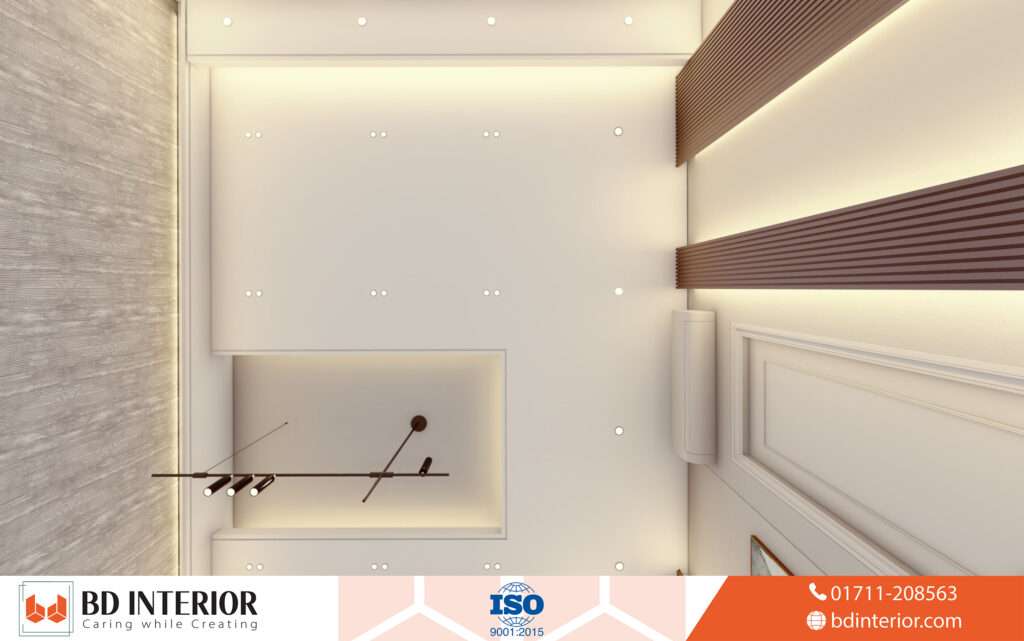
For years, the ceiling was just the ‘fifth wall,’ a forgotten part (depending entirely on the context) of the room. Probably and looks, becoming a room’s most — or rather — impactful feature, as interior designers regularly point out. It’s not just about covering what’s above; it’s about creating a face, adding depth. Even making your home feel bigger or more inviting. If you’ve been hesitant, thinking it’s too complicated. Or costly for your Dhaka apartment, let’s clear up that doubt right now. Not always. There are smart, stylish ways to change it without breaking the bank. Or your spirit, you know.
Key Point–
- Stretch ceilings offer a fast, sleek finish, often done in just a couple of days, much faster than traditional plaster work.
- Consider integrated LED strips and smart lighting; they create dynamic moods and can cut your electricity bill by around 15-20%.
- Don’t ignore acoustics, especially in open-plan spaces; sound-absorbing panels make a huge difference, improving clarity by up to 60%.
- For older homes, anticipate 20-30% extra budget for labor and unexpected structural fixes.
- Regular cleaning, especially in humid Bangladesh, keeps your investment looking fresh and prevents premature wear, potentially extending its life by several years.
Modern Ceiling Options for Your Dhaka Home
Modern ceiling options offer a range of aesthetic and practical benefits, from sleek, smooth finishes to architectural depth, hiding imperfections while bigly upgrading a room’s overall appeal.
When you think about interior ceiling design, the choices today are far beyond just a plain, painted slab. You have options that change the entire vibe of your living space. Looks at stretch ceilings, for instance; these are quickly becoming popular in Bangladesh, providing a (and the data generally agrees) smooth, almost liquid finish. They’re often made from PVC or polyester fabric, giving a truly contemporary look that many homeowners want for their modern home design projects.
Stretch Ceilings: Fast, Flawless Finish
Stretch ceilings are a real big deal if — well — actually — you’re looking for something snappy and clean. Installation is surprisingly speedy, a lot taking only two days for a standard living room, according — I mean, to a Reddit user (and that implies quite a bit) who loved their speedy transformation.
Keep that in mind. They’re moisture-resistant too, so they work great in kitchens and bathrooms. Preventing mildew, which is a common issue here due to humidity. Plus, a lot of come with a solid 10-15 year warranty, giving you peace of mind.
Coffered & Tray Designs: Architectural Flair
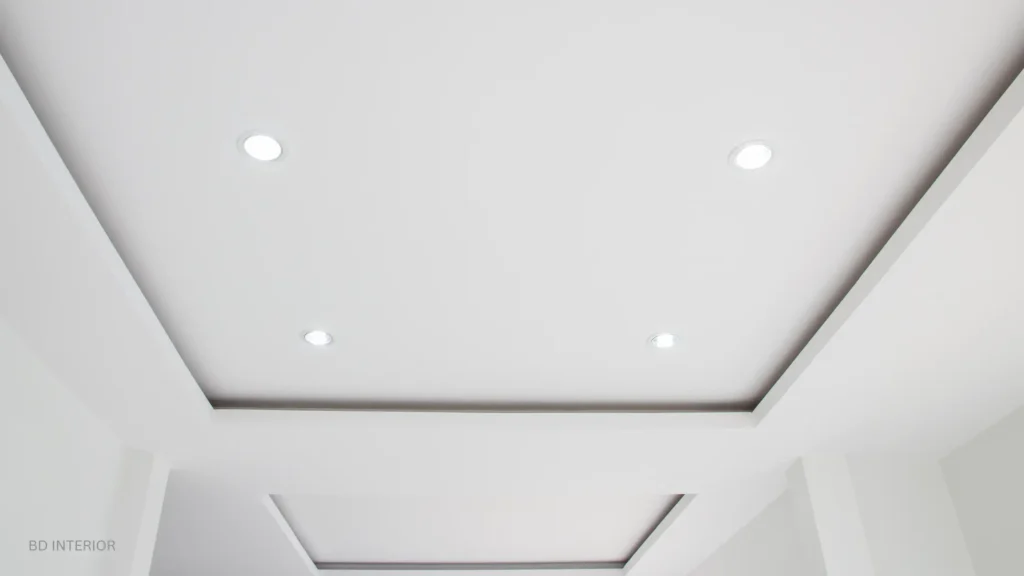
For a more classic or grand statement, coffered and tray ceilings are fantastic. Coffered designs feature recessed panels, giving a; wait, let me rephrase, grid-like pattern that adds serious architectural depth. Tray ceilings, looking at it differently, have a central recessed section, like an inverted tray; both can make a room feel taller than it actually is, maybe even by an extra foot or two visually.
They’re perfect for integrating accent lighting. You could say remember, though, these usually need skilled carpenters and can be quite labor-intensive.
False Ceilings: Hiding the Mess
False or dropped ceilings are practical workhorses. They’re great for hiding all sorts of things, ugly wiring. Exposed pipes, and even air conditioning ducts that you don’t want visible. A Facebook user noted how their new false ceiling hid all the ugly pipes and gave them space for beautiful recessed lights, calling the clean look worth the few inches of room height lost.
Beyond just hiding things, they also let you incorporate creative lighting solutions. And acoustic panels easily, which is pretty handy.
They do lower your room by a few inches, usually 4-6 inches. But the clean, uncluttered look often outweighs that small sacrifice.
Smart Lighting and Acoustics Overhead
Integrating advanced lighting systems and acoustic solutions into your ceiling design not only improves ambiance and functionality but also significantly improves comfort by controlling light and sound within your living areas.
On closer inspection, lighting isn’t just about brightness anymore; it’s about mood and adaptability. Modern ceiling designs now heavily feature integrated lighting. And honestly, you should too. Which means think about how much better a room feels when the light is just right, not too harsh, not too dim.
Integrated LED & Cove Lights
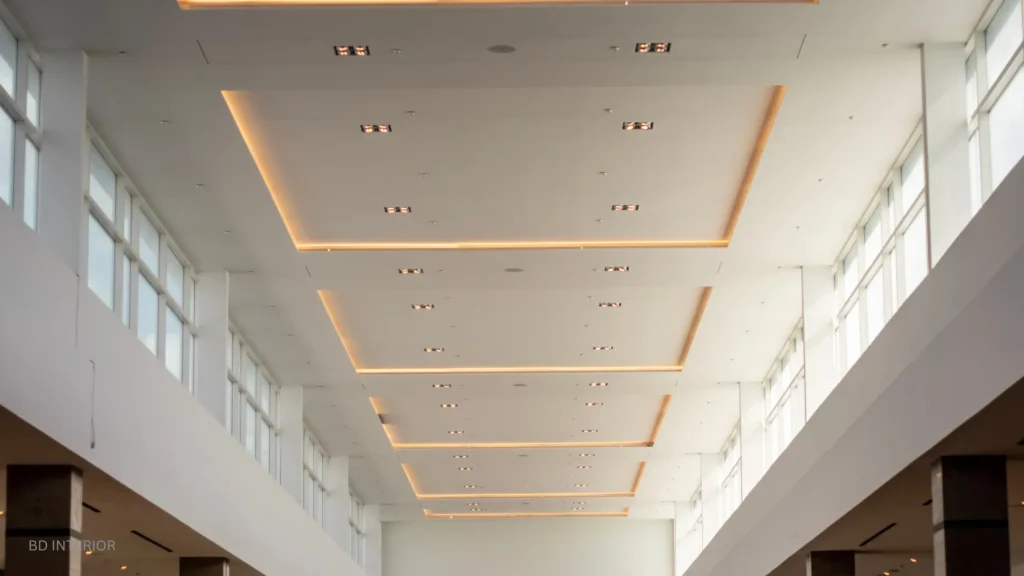
Hidden LED strips and cove lighting are — well, actually, super common right now for good reason. These lights tuck away into the ceiling structure. Giving off a soft, ambient glow that feels luxurious.
You can run LED strips along the edges of a tray ceiling or within a false ceiling’s hidden channels. This set up a halo effect. Highlighting architectural features without any visible light sources, which is pretty slick. In the long run, these low-energy LEDs constantly last for (and that implies quite a bit) upwards of 25,000 hours.
Meaning you won’t be changing bulbs often, saving you, to be more precise, (at least in many practical scenarios) both time and effort.
Noise Reduction with Panels
Here’s where many people mess up: acoustics. Especially in open-plan homes, which are common in apartment interior designs, sound bounces everywhere.
A homeowner on a forum lamented not thinking about acoustics in their open-plan kitchen-diner, saying every conversation echoed, and it was frustrating. Consider this: adding acoustic panels or specialized ceiling tiles can make a huge difference, reducing echo and noise by about 40-50%. Modern panels come in cool textures and designs. So they don’t look like ugly office tiles.
The key here is that they actually blend in quite well, or even become a design feature themselves.
Biophilic Touch: Natural Materials
Sure enough, bringing nature indoors isn’t just for plants on shelves. These natural materials add warmth, texture, and a sense of calm. To put it simply, they’re constantly chosen for their sustainability too, moving away from artificial finishes. Imagine looking up and seeing a beautiful wooden slat design, making your space feel like a peaceful retreat, a wonderful touch for your living room design in particular.
Common Mistakes to Sidestep in Ceiling Design
Avoiding typical pitfalls in ceiling design, like neglecting acoustics, underestimating installation difficulty, and ignoring long-term maintenance, ensures your investment yields lasting satisfaction and avoids costly rework.
Even with the best intentions, things can go wrong. Honestly, I’ve seen some real head-scratchers for ceiling projects., a general contractor, mentioned that when planning complex ceilings, you should always factor in at least 20-30% extra for labor. But does that actually hold up?
Unexpected structural challenges, especially if you live in an older building in Old Dhaka. What happens when you do? Ignoring these realities sets you up for frustration and overspending.
Overlooking Acoustics Early On
This one really drives people nuts in open-plan layouts. You get everything built, and it looks great. And then you realize every cough echoes.
The sound just travels — tons of homeowners regret not adding sound-absorbing elements, like acoustic panels, from the very beginning. Major shift.
In most cases, it’s much cheaper and easier to plan for sound control before the ceiling goes up. Not exactly what you’d expect. Rather than trying to fix it afterward with stick-on panels that mightn’t look as good.
Underestimating Installation Complexity
Now, some ceiling designs — like coffered or; wait, let me rephrase, tray ceilings, look simple but demand serious precision. ” This isn’t a (though exceptions exist, naturally) weekend project for a beginner. And honestly, that’s understandable. If you’re going for anything beyond a basic false ceiling. The key here is that trying to DIY a complex design could easily lead to uneven lines — gaps — or even structural issues, ending up costing more to fix later.
Neglecting Long-Term Maintenance
This is a big one, especially in our climate. Those beautiful recessed panels in a coffered ceiling?
They collect dust. A Quora user mentioned their coffered ceiling looked amazing but keeping the recessed areas dust-free was a constant battle, especially with pets.
Stretch ceilings might be easier. But they still need occasional cleaning to keep that pristine look. Think about how you’ll clean complex designs before you install them.
Forgetting about this can turn your dream ceiling into a dusty nightmare, requiring more frequent, tedious cleaning or even professional services.
Budgeting Your Ceiling Transformation in Bangladesh
Understanding the cost components of ceiling design, from material choices to labor and unexpected expenses, is key for effective budget planning and avoiding financial surprises in Bangladesh.
Building on that earlier point, money talks, right? And for home improvements, especially in a packed city like Dhaka, knowing what you’re in for financially is key. As it turns out, ceiling designs vary wildly in price, so a clear budget plan is a must. You can check standard design costs to get a general idea, but ceilings have their own specific factors.
Material Costs Breakdown
The materials themselves are a big part of the expense. Like, basic gypsum board for a false ceiling might run you around BDT 80-120 per square foot, including installation. Stretch ceilings, mostly due to their specialized fabric and installation, usually cost a bit more, maybe BDT 200-400 (which works out well in practice) per square foot.
Puts things in perspective. As it turns out, high-end wood panels or custom coffered sections could easily push prices past BDT 500-800 per square foot. Depending on the wood type and intricacy. LEDs, depending on brand and smart features, can add another BDT 50-150 per square foot for the lighting itself.
Labor and Expert Fees
Labor charges can sometimes be the biggest surprise. Skilled carpentry for coffered ceilings or specialized installation for stretch ceilings demands a premium. For complex designs, expect labor to account for 40-around 60% of your total project cost — which is why basic false ceiling installation might be included with the material, but custom work will involve separate, higher fees. Getting expert design help ensures quality.
But that also factors into the overall budget. Don’t cheap out on labor if you want a professional finish; it’ll show.
Hidden Costs to Plan For
For the average user, there are always those little things that add up. Think about structural inspections, especially for older buildings, which might cost BDT 5,000-15,000. The data speaks for itself. Painting and finishing work for false or coffered ceilings can add another 10-15% to your material and labor costs — if you’re moving wiring or pipes, a licensed electrician or plumber will charge separately.
Always keep a contingency fund. Probably around 15-nearly 20% of your initial estimate, to cover these unforeseen expenses.
Puts things in perspective. It’s like carrying an umbrella in monsoon season; you hope you don’t need it, but you’re glad if you’ve it.
Ensuring Your Ceiling Lasts: Maintenance Tips
Proper and consistent maintenance, including specific cleaning routines for different ceiling types and regular checks of integrated systems, extends the lifespan and preserves the aesthetic appeal of your ceiling investment.
You’ve invested time and money into a stunning ceiling. Now what? Keeping it looking impressive for years to come is not just about the initial installation. Plus, it means keeping an eye on things, especially in Bangladesh where dust and humidity are constant companions.
Regular maintenance prevents small problems from becoming big, expensive ones.
Keeping Stretch Ceilings Clean
Stretch ceilings are pretty low-maintenance, which is a huge plus. For general dust, a soft, dry microfiber cloth or a feather duster works wonders. If you get a smudge or a light stain, a damp cloth with a mild, — okay, more accurately, non-abrasive cleaner (like a bit of dish soap mixed with water) will usually do the trick.
Just avoid harsh chemicals or anything scratchy that could damage the PVC or fabric. A good wipe-down every couple of months should keep them looking new. It’s fairly direct, but constantly overlooked.
But this is just one piece of the puzzle.
Dusting Coffered Corners
This is where the user complaint about dust comes in handy. Coffered ceilings, with their recessed panels and sharp edges, are magnets for dust and cobwebs.
A long-handled duster with an extendable head is your best friend here. For more stubborn dust or grime, a soft brush attachment on your vacuum cleaner can work wonders. Probably if you let it go too, okay, more accurately, long, the dust can really build up.
And make the ceiling look dull and neglected, taking (at least in many practical scenarios) away from that elegant look.
Checking Integrated Lighting
Consider this practical perspective. Integrated LED strips and recessed lights are generally quite durable, but they’re not immortal. Periodically check that all your lights are working and that there’s no flickering. If you notice a segment of a LED strip going out, it might be a loose connection or a faulty driver.
For smart systems, make sure your app controls are still responsive and that any scheduled lighting changes are happening as they should. Sometimes, a breeze reset of the smart hub can fix minor glitches. These checks, done perhaps once a month, make sure your lighting functions perfectly and improves your room’s ambiance consistently.
FAQs
Can I install a false ceiling myself in Bangladesh?
While some basic false ceiling panels might seem DIY-friendly, especially for small areas. Complex designs like multi-layered gypsum board ceilings are best left to professionals. You risk uneven finishes, structural issues, and poor integration of lighting if not done — or at least, right; it’s a lot worth the extra cost for peace of mind and a professional finish. Of course, actual metrics may shift.
How long does a stretch ceiling last in Dhaka’s climate?
With proper care, a good quality stretch ceiling, usually made of PVC, more accurately, or polyester, can easily last 10-15 years, even in Dhaka’s humid conditions. The data speaks for itself. Their moisture-resistant properties actually make them quite suitable here. Just make sure good ventilation in bathrooms and kitchens to prevent any potential (which aligns with standard practices) condensation buildup on the surface.
Final Thoughts on Your Ceiling Project
Transforming your ceiling is a big step. It’s one that genuinely pays off, impacting your home’s entire feel.
From sleek stretch ceilings to elegant coffered designs, and smart lighting to acoustic (at least in many practical scenarios) workarounds, the options are vast. Just remember to plan carefully, consider those hidden costs, and don’t underestimate the value of professional help. Your ceiling isn’t just a lid; it’s a canvas waiting for your personal touch.
So, go ahead, look up, and start dreaming up something spectacular for your space. It’ll be worth it.